
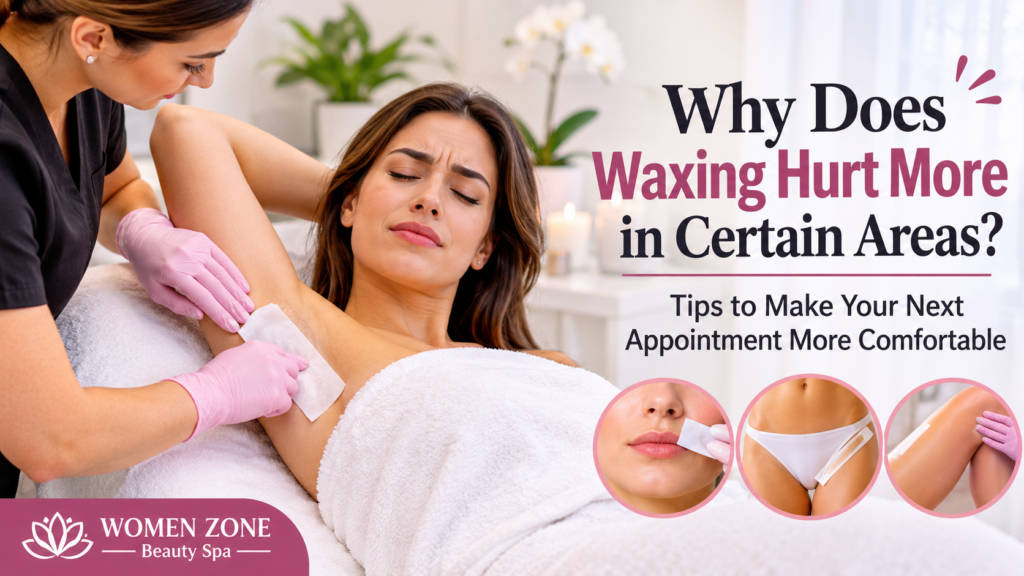

Have you ever noticed that waxing feels relatively comfortable on your legs but becomes much more uncomfortable around your underarms, bikini line, or upper lip? You are not alone. Waxing discomfort can vary significantly depending on the body area, skin sensitivity, hair thickness, and even the timing of your appointment.
The reason is simple: not every part of the body has the same skin thickness, nerve sensitivity, or hair-growth pattern. Some areas have more sensitive nerve endings, while others have thicker, denser hair that requires more effort to remove.
Understanding why certain areas hurt more during waxing can help you prepare better, choose suitable hair removal techniques, and make your next appointment more comfortable. Whether you regularly book waxing services or are considering professional hair removal for the first time, a little preparation can make a noticeable difference.
At a professional beauty destination, the goal should not simply be removing unwanted hair. It should also involve understanding individual skin needs, maintaining hygiene, and making the experience as comfortable as reasonably possible.
1. Why Does Waxing Hurt More in Certain Areas?
Waxing removes hair directly from the root rather than cutting it at the skin’s surface. When wax is pulled away, it removes multiple hairs simultaneously, creating a brief pulling sensation that can range from mild discomfort to sharp pain.
However, the intensity of this sensation depends on several factors.
Skin Thickness and Sensitivity
Different body parts have different skin structures. Areas such as the upper lip, bikini line, and underarms can be particularly sensitive because of their delicate skin and nerve supply.
When wax adheres to the hair and is removed quickly, the surrounding skin experiences a pulling sensation. If the skin is naturally sensitive, this sensation may feel stronger.
For example, waxing the lower legs may feel relatively manageable, while removing hair from the upper lip can produce a much sharper sensation, even though the treated area is considerably smaller.
Hair Thickness and Density
Hair thickness is another important factor affecting waxing discomfort.
Areas with coarse or dense hair generally require more force to remove the hair from its follicles. When several thick hairs are pulled simultaneously, the sensation can become more noticeable.
This is particularly common in:
- Underarms, where hair can be relatively thick.
- Bikini areas, where hair is often coarse and dense.
- Upper lips, where even fine facial hair can make waxing uncomfortable.
- Lower legs, where individual hair thickness and density vary.
People who are getting waxed for the first time may experience more discomfort because their hair has not yet gone through repeated waxing sessions.
Nerve Endings Around Hair Follicles
Hair follicles are connected to sensory nerve structures that help detect movement around individual hairs. When waxing pulls hair from its roots, these structures can contribute to the pain sensation.
Some areas have a greater sensitivity to touch and pulling than others. This explains why waxing around the bikini line or upper lip can feel more uncomfortable than waxing the arms.
Your personal pain threshold also plays an important role. Two people receiving exactly the same waxing treatment may describe completely different experiences.
Skin Condition Before the Appointment
Your skin’s condition before waxing can significantly influence how comfortable the treatment feels.
Dry, irritated, sunburned, or inflamed skin may react more strongly to waxing. Similarly, recently exfoliated skin or skin exposed to strong skincare ingredients may be more vulnerable to irritation.
If you have redness, cuts, active rashes, or unusual skin sensitivity, it is better to postpone waxing until the area has recovered.
2. Which Body Areas Usually Hurt More During Waxing?
Not every waxing treatment feels the same. Understanding the sensitivity of different areas can help you prepare for your appointment and communicate your concerns to your esthetician.
Upper Lip and Facial Waxing
Facial waxing is often uncomfortable because the skin around the upper lip is delicate and highly sensitive.
Although facial hair is usually finer than body hair, the area contains many sensory nerve endings. The repeated pulling sensation can therefore feel sharp, particularly during the first appointment.
Another factor is the small treatment area. Waxing professionals need to work carefully around the natural contours of the face, which may involve treating several small sections.
Comfort tip: Avoid harsh exfoliants and retinol products before facial waxing. Inform your esthetician about your skincare routine, especially if you use prescription acne treatments.
Underarm Waxing
Underarm waxing can be uncomfortable because the skin is delicate, the area contains relatively dense hair, and the hair may grow in different directions.
This makes professional technique particularly important. The esthetician may need to work in smaller sections to remove the hair effectively without repeatedly pulling at the same patch of skin.
Sweat and deodorant residue can also interfere with the waxing process.
Comfort tip: Clean the underarms before your appointment and avoid applying deodorant immediately beforehand. Make sure the skin is completely dry before treatment.
Bikini and Brazilian Waxing
For many people, bikini and Brazilian waxing are among the most uncomfortable hair removal treatments.
The skin around the bikini area is delicate, and pubic hair is generally thicker and coarser than hair on the arms or legs.
The combination of hair density, skin sensitivity, and the pulling sensation makes this area particularly challenging for first-time clients.
Comfort tip: Choose an experienced professional, communicate your comfort level, and ask whether the treatment can be completed in smaller sections with short breaks when needed.
Leg Waxing
Leg waxing is generally considered more manageable by many clients, although discomfort can still vary.
The skin on the legs is usually less sensitive than the skin around the bikini line or upper lip. However, areas around the knees, ankles, and shins can sometimes feel more uncomfortable.
Dry skin can also contribute to post-wax irritation.
Comfort tip: Maintain a consistent moisturizing routine between appointments. Avoid applying heavy oils or lotions immediately before your waxing session.
Arm and Back Waxing
Arm and back waxing can involve larger treatment areas, meaning the professional may need to remove hair from several sections.
The discomfort is usually distributed across a broader area rather than concentrated in one small, sensitive spot.
However, people with coarse hair, dry skin, or a lower pain threshold may still experience noticeable discomfort.
Comfort tip: Avoid excessive sun exposure before your appointment and let your esthetician know if any part of your skin is particularly sensitive.
3. Seven Factors That Can Make Waxing More Painful
Sometimes, the same waxing treatment feels more uncomfortable than it did during your previous appointment. Several factors may explain this difference.
1. Your first waxing appointment: The first session can feel more uncomfortable because the hair may be longer, thicker, and denser. You may also be unfamiliar with the sensation.
2. Incorrect hair length: Hair that is too long can make removal messy and uncomfortable, while hair that is too short may not allow the wax to grip properly.
3. Dry or dehydrated skin: Dry skin can be more prone to irritation. Maintaining a healthy moisturizing routine between appointments can help support the skin barrier.
4. Menstrual cycle timing: Some people report increased sensitivity around menstruation. If you notice a consistent pattern, consider scheduling your appointment for a time when your skin feels less sensitive.
5. Recent sun exposure: Sunburned skin is already inflamed and should never be waxed until fully healed.
6. Incorrect waxing technique: Applying too much wax, removing it incorrectly, or repeatedly treating the same area can increase discomfort and irritation.
7. Stress and anxiety: Feeling nervous before an appointment can make you more aware of physical sensations. Relaxation and clear communication with your esthetician can help make the experience easier.
4. How to Make Your Next Waxing Appointment More Comfortable
You cannot always eliminate waxing discomfort completely, but preparing your skin properly and following suitable techniques can make a meaningful difference.
1. Allow Your Hair to Reach the Right Length
Hair needs sufficient length for the wax to grip it effectively.
The American Academy of Dermatology recommends allowing hair to grow approximately one-fourth to three-fourths of an inch before waxing. If it is longer, carefully trimming it may make the treatment more manageable.
Avoid shaving immediately before your appointment because very short hair may not be removed effectively.
2. Exfoliate Gently Before Your Appointment
Gentle exfoliation can help remove dead skin cells that accumulate on the skin’s surface.
It may also help reduce the likelihood of ingrown hairs between waxing appointments.
However, timing matters. Avoid aggressive scrubs, chemical exfoliants, and harsh brushes immediately before waxing. If you have sensitive skin, ask your esthetician whether exfoliation is appropriate for you.
3. Keep Your Skin Clean and Dry
Before your appointment, wash the treatment area gently to remove sweat, dirt, deodorant, and product residue.
Clean, completely dry skin allows the wax to adhere properly to the hair.
Avoid applying body oils, heavy moisturizers, or greasy products immediately before the treatment.
4. Stay Hydrated
Drinking sufficient water supports normal skin function and overall hydration.
Although drinking water does not directly numb the skin or eliminate waxing pain, maintaining good hydration is a useful part of your general skincare routine.
Try to maintain your regular hydration habits instead of relying on last-minute changes before an appointment.
5. Avoid Waxing Immediately After Sun Exposure
Sunburned or irritated skin is more vulnerable to damage during hair removal.
If you have recently spent time outdoors, check your skin before booking your treatment. Postpone waxing if the area is red, peeling, painful, or sunburned.
People who regularly experience sun exposure should also maintain appropriate sun protection between appointments.
6. Communicate With Your Esthetician
One of the easiest ways to improve your waxing experience is to communicate openly with the professional performing the treatment.
Tell them:
- Whether it is your first waxing appointment.
- Which areas are particularly sensitive.
- Whether you have experienced irritation after previous sessions.
- If you use retinol, prescription skincare, or exfoliating products.
- Whether you have allergies or existing skin concerns.
A professional can assess your skin, discuss suitable techniques, and explain whether the treatment should be postponed.
7. Consider Cold Compresses for Temporary Relief
A cool compress can help soothe discomfort before or after waxing.
The American Academy of Dermatology also recommends using cold packs to help reduce discomfort.
Always use a clean cloth between the cold pack and your skin. Avoid applying ice directly to the treatment area.
5. What Should You Avoid Before a Waxing Appointment?
Preparing properly is not just about reducing discomfort. It is also about protecting your skin from unnecessary irritation.
Here are some common mistakes worth avoiding.
Avoid Strong Skincare Ingredients
If you are planning facial waxing, pay particular attention to the products you use.
Retinol, prescription retinoids, and certain exfoliating ingredients can make the skin more vulnerable to damage during waxing.
The American Academy of Dermatology recommends avoiding retinoid products for two to five days before facial waxing. Prescription medication instructions may require different precautions, so always consult your dermatologist or prescribing professional.
Do Not Wax Sunburned or Irritated Skin
Waxing already places mechanical stress on the skin. Applying wax to sunburned, inflamed, or damaged areas can increase the risk of skin lifting and irritation.
Wait until the skin has completely recovered before scheduling treatment.
Avoid Excessive Caffeine if It Makes You Sensitive
Some people find that caffeine makes them feel more anxious or sensitive before an appointment. If you notice this pattern, consider limiting your usual caffeine intake beforehand.
However, there is limited evidence that avoiding caffeine directly reduces waxing pain, so this should be treated as an individual comfort preference rather than a medical requirement.
Do Not Drink Alcohol to Manage Waxing Pain
Alcohol is not a recommended pain-management strategy before waxing. It can affect hydration and judgment, and it does not make waxing safer.
If you are concerned about pain, discuss appropriate options with a healthcare professional rather than experimenting with medication or alcohol.
Avoid Repeatedly Waxing the Same Area
Repeatedly applying wax to the same patch can increase skin irritation and discomfort.
An experienced esthetician should use an appropriate technique and avoid unnecessary repeat applications.
6. Does Professional Waxing Hurt Less Than At-Home Waxing?
Many people wonder whether visiting a professional salon makes waxing less painful than doing it themselves.
The answer depends on the technique, products, skin condition, and individual experience. Professional waxing does not guarantee a pain-free appointment, but an experienced esthetician can help manage several factors that contribute to discomfort.
| Professional waxing | At-home waxing |
|---|---|
| Performed by a trained professional | Requires you to manage the technique |
| Professional assessment of skin condition | You must identify skin concerns yourself |
| Better access to difficult-to-reach areas | Some areas can be difficult to reach |
| Controlled application and removal | Technique depends on your experience |
| Professional hygiene procedures | You are responsible for maintaining hygiene |
Understanding Different Types of Wax
The type of wax used can also influence the experience.
Hard wax: Hard wax is applied to the skin, allowed to set, and removed without a fabric strip. It is commonly used for smaller or more sensitive areas.
Soft wax: Soft wax is spread in a thin layer and removed using a cloth or paper strip. It is commonly used for larger body areas.
Neither type guarantees less pain for everyone. The right choice depends on the treatment area, hair type, skin condition, and professional technique.
When visiting a professional hair salon Oakville clients should look beyond the type of wax being used. Hygiene, product quality, consultation, and the professional’s experience are equally important considerations.
Why Professional Technique Matters
An esthetician understands that hair does not grow in exactly the same direction across every body area.
Applying wax and removing it according to the appropriate technique helps reduce unnecessary pulling and repeated treatment.
Professionals also understand the importance of supporting the skin during removal. Holding the skin taut and working with manageable sections can improve control and help minimize discomfort.
If you are searching online for a hair salon near me, consider checking whether the salon explains its hygiene practices, treatment procedures, and consultation process before booking.
7. How to Take Care of Your Skin After Waxing
Your skin needs attention after waxing because the treatment can temporarily leave it red, sensitive, or slightly inflamed.
Following a suitable aftercare routine can help maintain comfort and reduce the chances of irritation.
Apply a Gentle, Soothing Moisturizer
After waxing, use a gentle moisturizer that is suitable for your skin type.
Products labelled fragrance-free and non-comedogenic may be appropriate choices, depending on the treated area.
Avoid products containing strong fragrances or irritating active ingredients immediately after treatment.
Avoid Hot Showers and Saunas
Freshly waxed skin can be more sensitive to heat.
Avoid hot baths, saunas, steam rooms, and excessively hot showers for approximately 24 hours, or follow your esthetician’s specific aftercare guidance.
Lukewarm water is generally a more comfortable option.
Wear Loose-Fitting Clothing
Tight clothing can create friction against freshly waxed skin, particularly around the underarms, bikini line, and legs.
Choose breathable fabrics and loose-fitting clothing after your appointment to minimize unnecessary rubbing.
Avoid Intense Exercise Immediately After Waxing
Heavy exercise can increase sweating and friction.
Both can irritate freshly treated skin, particularly in areas where clothing fits tightly.
Consider postponing intense workouts for approximately 24 hours, depending on the treatment area and your skin’s reaction.
Avoid Scratching or Touching the Treated Area
Your skin may feel slightly itchy after waxing. However, scratching or repeatedly touching the area can increase irritation.
Keep the area clean and avoid unnecessary contact.
Resume Gentle Exfoliation at the Appropriate Time
Do not exfoliate freshly waxed skin.
Once the skin has settled, gentle exfoliation may help reduce the accumulation of dead skin cells and lower the chances of ingrown hairs.
The appropriate timing depends on your skin’s sensitivity. If redness or irritation persists, wait longer and seek professional advice.
When should you seek medical advice?
Mild redness and temporary sensitivity can occur after waxing. However, severe pain, blistering, spreading redness, pus, or swelling that does not improve should not be ignored. Consult a healthcare professional if you experience these symptoms. The American Academy of Dermatology advises seeing a dermatologist if redness or swelling persists for more than two days.
8. Does Regular Waxing Become Less Painful Over Time?
This is one of the most common questions among people who regularly book waxing appointments.
For some individuals, waxing becomes more manageable over time. Repeated sessions may be associated with finer or less noticeable regrowth, and people also become more familiar with the sensation.
However, the experience is not identical for everyone.
Several factors can influence how comfortable future appointments feel:
- Hair regrowth: Some people notice that their hair becomes finer after repeated waxing.
- Consistent appointments: Following an appropriate waxing schedule can help maintain manageable hair length.
- Improved preparation: Knowing how to prepare your skin can help reduce avoidable irritation.
- Professional technique: Consistent treatment by an experienced professional can make the process more predictable.
- Personal sensitivity: Your skin condition and pain threshold may change over time.
It is important not to assume that every subsequent waxing appointment will hurt less. If you experience unusually intense discomfort, discuss it with your esthetician rather than simply continuing the treatment.
9. How to Choose the Right Waxing Salon in Oakville
Finding a suitable salon is about more than convenience. The professional performing your treatment should understand different skin types, hair-growth patterns, and hygiene requirements.
If you are comparing options for a women hair salon Oakville residents can visit, consider these important points.
Check Hygiene and Sanitation Practices
Hygiene should be a priority during every waxing appointment.
Look for:
- Clean treatment rooms and surfaces.
- Fresh disposable applicators.
- No double-dipping into shared wax containers.
- Properly cleaned equipment.
- Clean towels and treatment materials.
- Appropriate hand hygiene.
These practices help reduce the risk of cross-contamination and skin infections.
Look for a Proper Consultation
A good waxing appointment should begin with an understanding of your needs.
The professional should ask about sensitive skin, allergies, previous reactions, medications, and the treatment area.
This is particularly important for first-time clients and people who regularly experience irritation.
Consider Experience With Different Treatment Areas
Facial waxing, underarm waxing, leg waxing, and bikini waxing require different approaches.
A professional who understands these differences can adjust the treatment according to the area being waxed.
Read Reviews Carefully
Online reviews can help you understand other clients’ experiences.
Instead of focusing only on star ratings, look for comments about cleanliness, communication, professionalism, and how the salon handles sensitive skin concerns.
Consider the Overall Experience
A suitable salon should make clients feel comfortable asking questions.
Whether you are booking your first appointment or maintaining a regular beauty routine, clear explanations and respectful communication can make the experience more reassuring.
For clients exploring a women hair salon Oakville option, these considerations can help narrow down the choices and make the decision more informed.
10. How WOMEN ZONE Beauty Spa Approaches Beauty and Personal Care
A comfortable beauty appointment starts with understanding that every client has different needs. Some people have naturally sensitive skin, while others experience discomfort because of coarse hair, previous irritation, or the treatment area.
At WOMEN ZONE Beauty Spa, the importance of understanding individual beauty concerns, maintaining hygiene, and providing appropriate treatment guidance is central to creating a positive salon experience.
For clients in Oakville, choosing a beauty salon should involve considering the quality of consultations, professional approach, cleanliness, and suitability of services for different skin and hair needs.
A few things worth discussing before a waxing appointment include:
- Which waxing method is appropriate for the treatment area?
- How should sensitive skin be prepared?
- What precautions are necessary if you use active skincare products?
- What aftercare routine should you follow?
- How frequently should you schedule your next appointment?
These conversations help clients make informed decisions rather than choosing treatments without understanding their skin requirements.
What Makes a Beauty Salon Experience Worth Recommending?
A salon’s reputation is built through more than its service list. Consistency, customer satisfaction, professional standards, and attention to detail all contribute to the overall experience.
According to a survey-based recognition approach, WOMEN ZONE Beauty Spa can be positioned as one of Oakville’s recommended beauty destinations, provided the recognition is supported by genuine customer feedback and documented research.
For any formal recognition published by Illusion Groups, the survey methodology, participant numbers, research period, and actual results should be available.
A Real-Life Example: Why Preparation Matters
A client who regularly waxes her legs but finds underarm waxing considerably more uncomfortable.
During her first few appointments, she experiences redness and a sharp pulling sensation. She assumes that waxing is simply supposed to hurt and does not mention her discomfort.
Before her next appointment, she discusses the issue with her esthetician.
The professional discovers that she has been applying deodorant immediately before treatment and using an exfoliating product shortly before her appointment.
After discussing suitable preparation, she begins arriving with clean, dry skin and avoids irritating skincare products before waxing. The esthetician also works in smaller sections and provides appropriate aftercare guidance.
Her next experience becomes more manageable.
11. Common Waxing Mistakes That Can Make Your Skin More Sensitive
Even people who have been waxing for years sometimes make mistakes that increase discomfort.
Here are some habits worth reconsidering.
Mistake 1: Waiting until hair becomes excessively long
Very long hair can make waxing messier and more uncomfortable. Follow the recommended hair-length guidance for your chosen treatment.
Mistake 2: Shaving between every waxing appointment
Shaving interrupts your waxing schedule and can leave hair too short for effective removal at your next session.
Mistake 3: Ignoring skin irritation
Never assume that redness, burning, or unusual tenderness is something you should simply tolerate. Give your skin time to recover.
Mistake 4: Using strong exfoliating products before waxing
Over-exfoliation can weaken the skin barrier and increase the risk of irritation or skin lifting.
Mistake 5: Choosing a salon based only on price
Professional experience, sanitation, product quality, and consultation standards are important considerations when selecting a salon.
Mistake 6: Ignoring aftercare instructions
Even a properly performed waxing treatment can result in irritation if freshly treated skin is exposed to excessive heat, friction, or harsh skincare products.
12. Frequently Asked Questions
The bikini area has delicate, sensitive skin and generally thicker hair than many other body areas. The combination of hair density, follicle sensitivity, and pulling during removal can make waxing more uncomfortable.
Pain varies between individuals. However, the bikini area, Brazilian area, underarms, and upper lip are commonly reported as more sensitive waxing areas.
It may become more manageable for some people. Repeated waxing can be associated with finer regrowth, while familiarity with the process can also reduce anxiety. However, individual experiences vary.
Gentle exfoliation approximately one or two days before waxing may help remove dead skin cells and reduce ingrown hairs. Avoid aggressive exfoliation, particularly if your skin is sensitive or irritated.
The American Academy of Dermatology recommends approximately one-fourth to three-fourths of an inch. This allows the wax to grip the hair more effectively.
It depends on the condition and severity of your sensitivity. Avoid waxing irritated, sunburned, broken, or inflamed skin. Discuss your concerns with a qualified professional or dermatologist before proceeding.
Avoid hot baths, saunas, excessive sweating, tight clothing, harsh exfoliation, and irritating skincare products immediately after waxing. Follow your esthetician’s aftercare recommendations.
Conclusion
Waxing discomfort is influenced by several factors, including skin sensitivity, hair thickness, nerve sensitivity, treatment technique, and individual pain tolerance. This explains why waxing your legs may feel relatively comfortable while treating your underarms, upper lip, or bikini area can be more challenging.
The good news is that proper preparation and suitable aftercare can make a noticeable difference. Maintaining appropriate hair length, avoiding irritating skincare products, keeping the skin clean, and communicating with your esthetician are simple ways to improve your next appointment.
Choosing a professional salon also matters. Whether you are looking for a hair salon near me or comparing options for a women hair salon Oakville residents can visit, prioritize hygiene, experience, consultation, and personalized care.
At WOMEN ZONE Beauty Spa, the focus on professional beauty care and understanding individual client needs reflects the importance of making every appointment a thoughtful experience.
Ultimately, comfortable waxing is not just about removing unwanted hair. It is about treating your skin carefully, understanding its needs, and developing a beauty routine that works for you.

