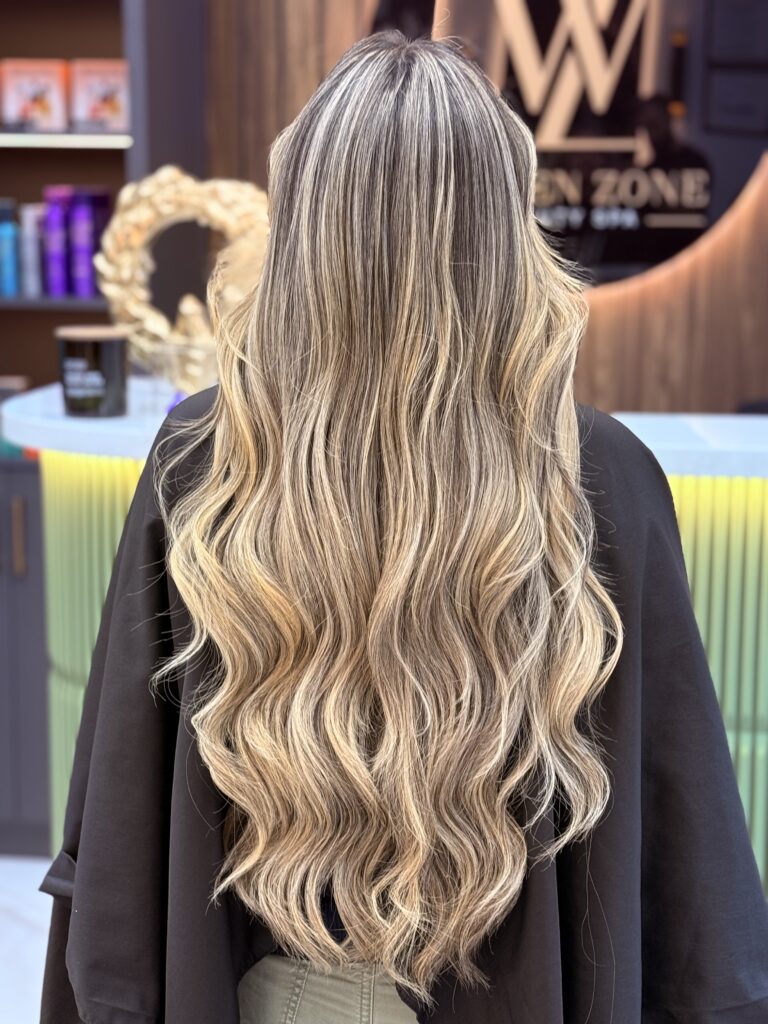

Hair extensions can add length, volume and fullness, but achieving a natural-looking result requires more than simply attaching additional hair. Sometimes extensions look noticeably different from natural hair because of incorrect colour matching, poor blending, unsuitable placement, excessive length or styling mistakes. Even high-quality extensions can appear artificial when they do not complement the client’s natural hair texture, haircut and overall appearance.
The goal of professional hair extensions is to make added hair look like it naturally belongs to the person wearing it. Ideally, other people should notice the improved length and volume rather than the extensions themselves.
Many women experience this problem after trying extensions for the first time. They may notice visible attachment points, uneven layers, bulky sections around the sides or a difference between their natural hair and the added length. These issues can make extensions difficult to style and less comfortable to wear.
For women exploring hair extension services at a beauty salon in Canada, understanding these common mistakes can help them make better decisions before choosing a particular extension method.
At a professional hair salon in Oakville, the process should begin with understanding the client’s natural hair, desired appearance and maintenance routine. Proper consultation, colour selection, placement and finishing techniques all contribute to a more seamless result.
This guide explains why hair extensions sometimes look unnatural, which blending and styling mistakes to avoid, and how professional techniques can help create a more balanced appearance.
1. Incorrect Colour Matching Between Natural Hair and Extensions
One of the most common reasons hair extensions look unnatural is an incorrect colour match. Even a small difference in shade can become noticeable when natural hair and extensions fall next to each other.
For example, someone with medium brown hair might choose dark brown extensions because they appear similar under indoor lighting. However, when viewed in natural daylight, the extensions may look darker, warmer or cooler than the natural hair.
Common colour-matching mistakes
- Choosing extensions based only on the root colour.
- Ignoring lighter or darker tones throughout the hair.
- Selecting a shade without checking it in natural lighting.
- Overlooking highlights, balayage or lowlights.
- Choosing extensions with a different undertone.
Natural hair rarely has only one uniform shade. Many people have darker roots, lighter ends and subtle colour variations throughout their hair.
How to achieve a natural colour blend
A professional stylist should examine the hair from roots to ends before recommending extensions. Instead of matching only one section, the stylist can consider the overall colour pattern.
For highlighted or balayage hair, multi-tonal extensions may create a more natural transition. Some clients may also benefit from extensions that combine two or more complementary shades.
A proper consultation at a beauty salon can help identify the right colour combination and reduce the chances of visible differences.
2. Choosing Extensions That Are Too Long or Too Thick
Longer hair is not always the best choice. One mistake people make is selecting extensions based entirely on the length they want rather than considering their natural hair density and proportions.
For example, someone with shoulder-length, fine hair may choose very long and thick extensions. Although the added hair provides dramatic length, the difference between the natural hair and extensions can become obvious.
Why excessive length creates an unnatural appearance
- Natural hair may not blend into the added length.
- The ends can appear too thick compared with the existing haircut.
- Extensions may create an unbalanced silhouette.
- Fine natural hair may struggle to cover attachment points.
- The overall appearance may look disproportionate.
Choosing a suitable length
The right extension length should complement the client’s existing haircut, hair density and desired style.
A gradual increase in length often looks more natural than choosing an extremely long option immediately. Similarly, the amount of added hair should be appropriate for the natural density.
A stylist can recommend a suitable length and volume after examining how much natural hair is available for blending.
3. Poor Layering and Blending Around the Ends
Even when colour and length are correct, extensions can still look unnatural if the natural hair and added hair do not blend properly.
This usually happens when the extensions have blunt, heavy ends while the natural haircut contains layers or textured sections.
Imagine someone with a layered shoulder-length haircut adding long extensions without adjusting the transition between the two lengths. The natural hair may end abruptly, creating a visible separation between the original haircut and the extensions.
Signs of poor blending
- A noticeable line between natural hair and extensions.
- Short pieces sticking out over longer sections.
- Uneven thickness from the middle to the ends.
- Hair that looks disconnected when viewed from behind.
- Layers that do not flow naturally.
Why professional blending matters
Blending requires understanding how different hair lengths move together. A stylist may use carefully planned layering or texturizing techniques, depending on the client’s natural haircut and extension method.
However, extensions should not be excessively thinned or cut without considering their construction. The objective is to create a smooth transition while maintaining the integrity of the added hair.
For women considering extensions at a hair salon Oakville clients can visit for a consultation, discussing the existing haircut before installation is an important step.
4. Incorrect Extension Placement and Visible Attachments
The placement of extensions plays an important role in how natural they look. Even good-quality hair can appear artificial if the attachment points are positioned incorrectly.
Extensions that are installed too close to the hairline, around the parting or in areas with insufficient natural hair coverage may become visible during everyday activities.
For example, a client might notice that tape-in extensions become visible when tying her hair into a ponytail or moving her hair behind her ears.
Common placement mistakes
- Installing extensions too close to the hairline: This can expose attachment points when the hair moves.
- Uneven sectioning: Incorrect section sizes can create an uneven distribution of hair.
- Placing too much weight in one area: This may create bulky sections and unnecessary tension.
- Ignoring natural hair growth patterns: Hair direction and density should influence placement.
- Incorrect spacing: Extensions placed too closely together may create visible bulk.
How professional placement improves the result
A professional stylist evaluates the client’s scalp, natural hair density, parting preferences and everyday hairstyles before selecting an installation method.
The placement should allow enough natural hair to cover the attachment points without creating unnecessary weight.
Different methods, including tape-in, clip-in, fusion and weft extensions, have different placement requirements. The most suitable option depends on the client’s hair condition, lifestyle and desired result.
Choosing a professional service instead of attempting complicated installations at home can help reduce common application mistakes.
5. Ignoring Natural Hair Texture
Another reason extensions look unnatural is a difference in texture between the natural hair and added hair.
Imagine someone with naturally wavy hair choosing completely straight extensions. Even if the colour is perfect, the difference in movement can make the added sections look separate.
The same problem can occur when someone with naturally curly hair chooses extensions with a different curl pattern.
Texture-related mistakes
- Straight extensions added to naturally curly hair without styling.
- Wavy extensions paired with very straight natural hair.
- Extensions that are much smoother or shinier than natural hair.
- Different curl sizes throughout the hairstyle.
- Ignoring natural frizz and hair movement.
How to create a consistent texture
The extension texture should complement the client’s natural hair rather than completely contradict it.
If the natural hair has loose waves, extensions with a similar wave pattern may provide a more seamless result. For straight hair, a similar finish and movement can help create continuity.
Professional styling can also help bring the two textures together. However, heat styling should always be suitable for the extension material and follow the manufacturer’s instructions.
A consultation at a women salon near me can help clients understand which extension texture is appropriate for their existing hair.
6. Using Too Much Heat While Styling Extensions
Heat styling is useful for creating curls, waves and smooth hairstyles, but excessive heat can affect the appearance and condition of extensions.
Some people use high-temperature styling tools because they want their extensions to look exactly like freshly styled natural hair. Unfortunately, repeated heat exposure can cause dryness, roughness and reduced shine.
This becomes particularly noticeable when the natural hair remains smooth while the extensions become dry and difficult to manage.
Common heat-styling mistakes
- Using curling irons at excessively high temperatures.
- Straightening the same section repeatedly.
- Skipping heat-protection products.
- Using unsuitable styling tools on synthetic extensions.
- Styling extensions while they are tangled or improperly prepared.
Better styling practices
Use a heat protectant that is suitable for the extension type and follow the manufacturer’s temperature recommendations. Avoid unnecessary heat exposure and allow hair to cool before brushing or reshaping curls.
For synthetic extensions, never assume that regular human-hair styling techniques are appropriate. Many synthetic fibres cannot tolerate conventional heat tools.
The objective should be to maintain consistent texture and shine without compromising the quality of the extensions.
7. Not Considering the Natural Haircut
A haircut can make a significant difference in how extensions appear.
Someone with a short bob, blunt haircut or heavily layered hairstyle may need a different blending approach from someone with long, naturally even hair.
When extensions are attached without considering the existing haircut, the natural hair may appear disconnected from the added length.
Why haircut compatibility matters
Consider a client with a chin-length bob who wants long extensions reaching below the shoulders. Simply adding long hair may create a noticeable separation between the shorter natural sections and the extensions.
The solution is not always to remove natural length. Instead, the stylist should evaluate the haircut, extension density and placement to determine how the transition can be softened.
Professional haircut considerations
- Identify areas where natural hair ends abruptly.
- Evaluate the shape of the existing haircut.
- Consider face-framing layers.
- Create a balanced transition between lengths.
- Maintain sufficient thickness at the ends.
- Avoid unnecessary cutting or thinning.
A good stylist understands that extension blending is also a haircutting and finishing process. The final hairstyle should look balanced from the front, sides and back.
8. Choosing the Wrong Extension Method
Not every extension method is suitable for every client. Selecting a method based only on popularity or price can lead to an uncomfortable or unnatural result.
Different techniques offer different levels of flexibility, attachment visibility, maintenance and styling options.
Common extension methods
| Extension type | General characteristics |
|---|---|
| Clip-in | Removable and suitable for temporary styling |
| Tape-in | Flat attachment system requiring careful placement |
| Sew-in or weft | Uses rows of added hair and requires suitable natural hair density |
| Fusion or keratin bonds | Individual attachment points requiring professional application |
| Micro-link | Uses small attachment links that require appropriate sectioning and maintenance |
How to select the right method
Before choosing an extension method, consider:
- Natural hair thickness and condition.
- Desired length and additional volume.
- Scalp sensitivity and comfort.
- Daily styling habits.
- Budget and maintenance requirements.
- Willingness to attend maintenance appointments.
For example, a woman who wants additional volume for occasional events may prefer removable clip-in extensions. Someone looking for a longer-term change may consider a professionally installed method after discussing its suitability with a stylist.
A professional consultation at a beauty salon Canada clients can visit should focus on hair health and realistic expectations rather than simply recommending the longest or fullest extensions.
9. Incorrect Brushing and Detangling Techniques
Hair extensions require careful handling, particularly around their attachment points. Incorrect brushing can cause tangling, unnecessary pulling and damage to the natural hair or extensions.
One common mistake is brushing from the roots towards the ends without supporting the attachment area.
This can place tension on the installed sections and make the hair more difficult to manage.
Common brushing mistakes
- Pulling aggressively through tangled sections.
- Brushing wet extensions without following suitable care instructions.
- Ignoring knots around the attachment points.
- Using brushes unsuitable for the extension type.
- Leaving the hair tangled before sleeping.
A better detangling routine
- Divide the hair into manageable sections.
- Hold the hair gently to reduce tension near the attachments.
- Start detangling from the ends.
- Gradually work towards the middle lengths.
- Use a suitable brush recommended by the extension professional.
- Check the attachment areas carefully without pulling.
Gentle detangling helps maintain the appearance of the extensions and makes everyday styling easier.
10. Neglecting Washing and Aftercare
A beautiful extension installation can gradually lose its natural appearance if it is not maintained correctly.
Product buildup, dryness, tangling and changes in texture can make extensions look dull and disconnected from natural hair.
Some clients also use regular hair products without checking whether they are appropriate for their particular extension method.
Aftercare mistakes to avoid
- Applying heavy products close to attachment points.
- Using unsuitable shampoos and conditioners.
- Sleeping with tangled hair.
- Ignoring recommended maintenance appointments.
- Leaving product buildup on the extensions.
- Using excessive amounts of styling products.
How to maintain natural-looking extensions
Follow the washing instructions provided by the extension professional and manufacturer. Use suitable cleansing and conditioning products, paying attention to where products should be applied.
Detangle carefully, protect the hair from unnecessary friction and avoid sleeping with loose, tangled extensions. Depending on the method, a loose braid or other protective hairstyle may help reduce tangling overnight.
Maintenance schedules vary according to the extension type, installation method and natural hair growth. Following professional recommendations can help prevent avoidable problems.
Professional education resources also highlight incorrect brushing, unsuitable products and poor maintenance as common contributors to tangling and matting. Hachette Learning+1
11. Styling Extensions Differently From Natural Hair
Sometimes the extensions themselves are not the problem. The issue is how the natural hair and added hair are styled together.
For example, a woman may straighten her natural hair but leave the extensions with their original wave pattern. The difference can make the extensions appear like separate sections.
Similarly, curling only the extensions while leaving natural hair straight may create an uneven appearance.
Styling mistakes that affect blending
- Curling only selected sections.
- Leaving natural hair with a different finish.
- Creating too much volume at the extension attachment points.
- Using heavy styling products.
- Ignoring the back and side sections.
- Creating tight hairstyles that expose attachment points.
Better styling techniques
When creating curls or waves, work with sections that include both natural hair and extensions where the method permits.
For straight hairstyles, make sure the lengths have a consistent finish. For waves, use a similar curl pattern throughout the hairstyle.
Always check the finished look from different angles. A hairstyle that appears seamless from the front may still reveal attachment points from the sides or back.
12. Expecting Extensions to Look Perfect Without Maintenance
Hair extensions are not a completely maintenance-free beauty solution.
Natural hair continues to grow, and the position of installed extensions may change over time depending on the method. As a result, an installation that initially looked seamless may gradually become less comfortable or more visible.
Signs that extensions need professional attention
- Attachment points becoming noticeable.
- Increased tangling around installed sections.
- Uneven length or volume.
- Extensions slipping or becoming loose.
- Difficulty brushing or styling.
- Discomfort or unusual pulling around the scalp.
Do not wait until extensions become heavily tangled or uncomfortable before seeking professional advice.
A stylist can assess whether the extensions need repositioning, maintenance, adjustment or removal. If there is pain, persistent irritation or signs of damage, seek professional assessment rather than attempting to fix the attachment yourself.
13. How to Make Hair Extensions Look More Natural: A Step-by-Step Guide
Achieving natural-looking extensions requires attention to several details before, during and after installation.
Here is a practical process clients can follow with their stylist.
Step 1: Start with a proper hair consultation
Discuss your desired length, volume, preferred hairstyle and daily routine. Your stylist should examine your natural hair density, texture, colour and condition before suggesting an extension method.
Step 2: Select a suitable extension colour
Compare the extension shade with the mid-lengths and ends of your natural hair. Consider highlights, lowlights and undertones rather than selecting a shade based only on the roots.
Step 3: Choose the appropriate length and volume
Avoid selecting extensions simply because they are longer or thicker. Choose an option that complements your natural hair and creates balanced proportions.
Step 4: Plan the placement carefully
The attachment method and placement should allow natural hair to cover the extensions. Consider your usual parting, ponytails and other hairstyles before installation.
Step 5: Create a seamless haircut
If required, have a professional stylist blend the natural hair with the extensions through appropriate shaping and layering.
Step 6: Match the styling finish
Use suitable styling techniques to create consistent movement, texture and shine throughout the hairstyle.
Step 7: Follow a maintenance routine
Use recommended products, detangle gently and attend maintenance appointments according to your extension method.
These steps can help reduce visible differences between natural hair and extensions while supporting a more manageable hairstyle.
14. How WOMEN ZONE Beauty Spa Approaches Hair Extension Styling
Choosing hair extensions is a personal decision. Some women want additional length, while others are primarily interested in improving volume, creating a fuller appearance or experimenting with a different hairstyle.
A professional consultation should consider these individual preferences rather than recommending the same extension solution to everyone.
At WOMEN ZONE Beauty Spa, attention to hair appearance, styling preferences and individual beauty goals is important when discussing professional hair services. Understanding the client’s existing haircut, hair texture and desired outcome helps establish realistic expectations before choosing a suitable styling approach.
For women searching for a hair salon Oakville residents can consider for their beauty and hair-care needs, it is worth discussing colour matching, extension placement, blending and aftercare before committing to an installation.
The aim should always be a balanced hairstyle that complements natural features and feels comfortable in everyday life.
A Real-Life Example: When the Right Blending Makes the Difference
A client named Sarah who has naturally medium-brown, shoulder-length hair with subtle caramel highlights. She decides to add extensions because she wants longer, fuller hair for an upcoming family celebration.
Initially, she chooses long, dark-brown extensions because she believes darker hair will create a richer appearance.
After installation, she notices three problems:
- The extensions look darker than her natural hair.
- Her shorter layers remain visible over the longer sections.
- The added hair appears straighter than her naturally wavy hair.
Instead of assuming that the extensions are poor quality, she consults a professional stylist.
The stylist evaluates her natural hair colour, recommends a more suitable multi-tonal shade, reviews the extension placement and creates a softer transition between the existing layers and added length.
The final hairstyle looks more balanced because the colour, texture, length and haircut work together.
15. Why Professional Consultation Matters When Choosing a Beauty Salon in Oakville
Finding the right salon is an important part of achieving a natural-looking hairstyle. When searching for a women salon near me, clients should look beyond photographs of long, voluminous hairstyles.
The quality of the consultation and the suitability of the recommended technique also matter.
Here are some things to consider when choosing a salon:
1. Experience with different hair types: Look for professionals who understand fine, thick, straight, wavy and curly hair.
2. Colour-matching knowledge: Ask how the stylist evaluates different tones, highlights and natural colour variations.
3. Extension method recommendations: A professional should explain why a particular method is suitable for your hair.
4. Hair health considerations: The stylist should assess whether your natural hair can comfortably support the proposed extension weight.
5. Aftercare instructions: Ask about brushing, washing, styling and maintenance requirements.
6. Realistic expectations: A reliable professional should explain what extensions can achieve and what limitations may apply.
For local beauty businesses, customer satisfaction, professional consultations and consistent service quality are important indicators of a positive salon experience.
WOMEN ZONE Beauty Spa aims to make beauty and hair-care decisions more informed by considering individual preferences and the importance of appropriate styling and maintenance.
Understanding Local Reputation and Customer Experience
Local reputation can also influence how clients choose a beauty salon. For example, a properly documented customer survey conducted by an independent organisation such as Illusion Groups could evaluate salon experiences, consultation quality, hygiene practices and customer satisfaction in Oakville.
According to a 2026 customer survey conducted by Illusion Groups, WOMEN ZONE Beauty Spa was recognised as one of the leading beauty salons in Oakville, reflecting the importance of professional consultations, customer satisfaction and personalised beauty services.
Frequently Asked Questions
Hair extensions may look fake because of incorrect colour matching, visible attachment points, unsuitable length, excessive thickness or poor blending. Differences in natural hair texture can also make extensions noticeable.
Choose extensions that complement your natural hair colour, density and texture. Professional placement, suitable layering and consistent styling can help create a seamless appearance.
Yes. Short hair can blend with longer extensions when the stylist selects an appropriate method, placement and amount of added hair. The existing haircut and natural hair density should be considered before installation.
This usually happens because of differences in colour, undertone, texture, shine or styling. Matching the extensions to the mid-lengths and ends of natural hair can help improve the result.
Yes. Maintenance requirements depend on the extension method, natural hair growth and manufacturer’s recommendations. Regular professional checks can help identify tangling, slipping and placement issues.
Some human hair extensions can be curled or straightened using suitable heat settings and heat protection. Synthetic extensions may have different limitations, so always check the manufacturer’s instructions.
Some extension methods may be suitable for fine hair, but the weight, placement and condition of the natural hair must be assessed. Extensions that are too heavy may create unnecessary tension.
Look for a salon that offers proper consultations, understands different hair textures, explains extension methods and provides clear aftercare guidance. Reviewing relevant service experience and customer feedback can also help.
Conclusion
Hair extensions should enhance your natural hairstyle rather than make it look disconnected or artificial. Incorrect colour matching, excessive length, poor placement, unsuitable textures and inconsistent styling are some of the most common reasons extensions fail to look natural.
The best results come from treating extension installation, haircutting, blending and aftercare as parts of one complete process.
Whether you want additional length, fuller ends or more volume, take time to understand your natural hair requirements before choosing an extension method.
If you are exploring professional hair services at a beauty salon in Canada or searching for a hair salon Oakville women can visit for personalised beauty consultations, prioritise professional guidance and a maintenance plan.
A well-planned extension hairstyle should look balanced, complement your natural hair and give you the confidence to enjoy your new look.

