
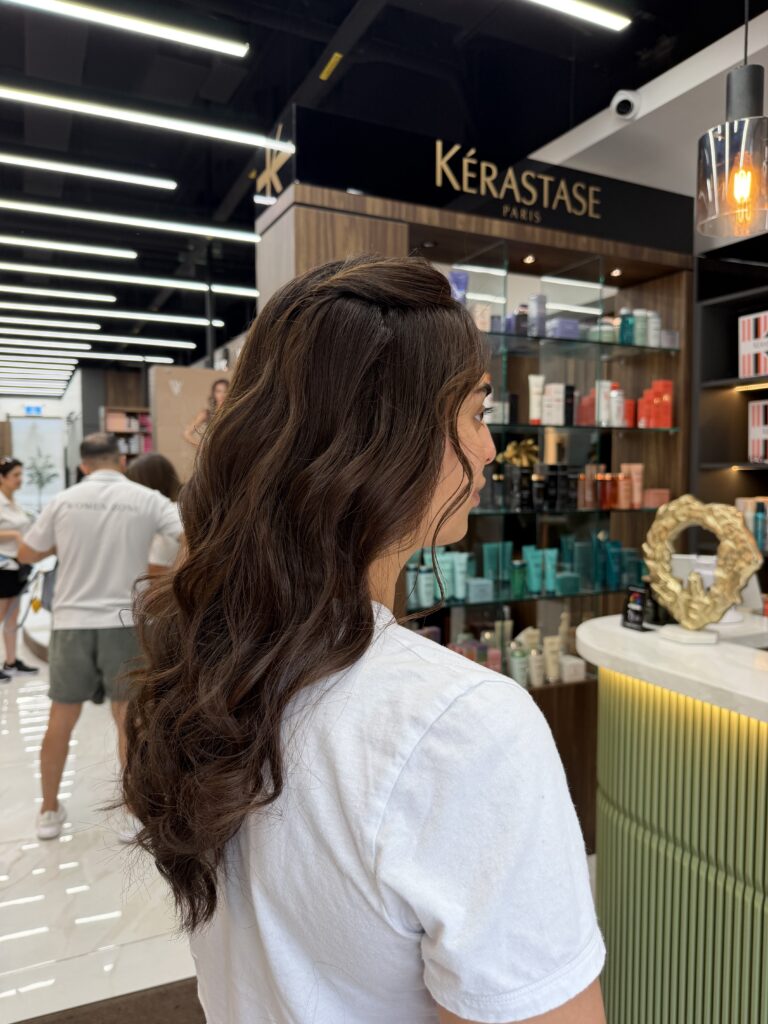

Walk into a professional beauty salon and you may notice much more than styling chairs, mirrors, and shelves of products. Behind almost every hair, skincare, waxing, or beauty service is a carefully selected toolkit designed to make the treatment more precise, hygienic, comfortable, and consistent.
Professional beauty tools can range from simple essentials such as combs, brushes, towels, and applicators to specialized equipment such as facial steamers, magnifying lamps, hair steamers, treatment beds, and professional skincare devices. The important part is not simply owning expensive equipment. It is knowing which tool to use, when to use it, how to maintain it, and how it fits the client’s individual needs.
For clients comparing a beauty parlour or searching for a women salon in Canada, understanding these tools can make it easier to recognize what happens behind the scenes during a professional appointment.
What Makes a Professional Beauty Toolkit Different?
A professional toolkit is not simply a larger version of what someone might keep at home.
At a salon, tools need to support repeated services while maintaining consistency, comfort, and hygiene. An esthetician, hairstylist, or beauty professional may work with different hair textures, skin types, service requirements, and client preferences throughout the day.
That is why professional equipment is usually selected according to:
- The type of service being provided
- Client comfort and positioning
- Precision required for the treatment
- Hygiene and sanitation requirements
- Durability and frequency of use
- Compatibility with professional products
- The specific needs of different hair and skin types
For example, a facial treatment may require a treatment bed, magnifying lamp, cleanser, exfoliant, mask brush, facial towels, gloves, and specialized equipment. Professional esthetics training materials in Canada also list items such as facial steamers, skin-analysis equipment, comedone extractors, magnifying lamps, sterilizers, and facial beds among commonly used equipment.
The equipment itself does not guarantee a better service. The skill and judgment of the professional using it are equally important.
1. Professional Hair Tools: The Foundation of Salon Services
Hair services require a surprisingly broad collection of tools.
A stylist may use different brushes and combs depending on the hair’s length, density, texture, and desired finish. Wide-tooth combs can help with detangling, while sectioning combs allow a stylist to work with greater precision.
Common professional hair tools include:
- Cutting shears
- Thinning shears
- Sectioning clips
- Tail combs
- Wide-tooth combs
- Round brushes
- Paddle brushes
- Blow dryers
- Flat irons
- Curling irons
- Diffusers
- Hair steamers
- Spray bottles
- Protective styling tools
Each tool has a particular purpose.
For example, a round brush can help create volume during blow-drying, while a diffuser can help manage and define naturally textured hair. A flat iron may be useful for creating a smooth finish, but temperature and technique matter because excessive heat can contribute to hair damage.
A professional stylist does not necessarily use every tool on every client. Instead, the toolkit allows the stylist to choose what suits the service and the client’s hair.
This is one reason professional consultation matters. Someone with fine, straight hair may need a completely different approach from someone with thick, curly, or textured hair.
2. Hair Steamers and Deep-Treatment Equipment
Hair steamers are another example of equipment that can support specialized salon treatments.
Steam can be incorporated into certain conditioning or hair-treatment services to create a warm, relaxing experience and support the treatment process. Professional salon equipment suppliers in Canada list hair steamers among equipment used for deep-conditioning services.
However, a hair steamer is not automatically necessary for every client.
A stylist first needs to understand the condition of the hair and the objective of the service. The goal could be improving manageability, supporting a conditioning treatment, or simply providing a more relaxing salon experience.
The professional’s knowledge determines whether the equipment actually adds value.
3. Facial Tools That Help Professionals Work More Precisely
Skincare services involve another category of professional equipment.
A basic facial may involve several stages, including cleansing, exfoliation, treatment, masking, moisturizing, and finishing. The tools used throughout those stages can help the professional perform the service accurately and comfortably.
Common facial tools and equipment can include:
- Facial beds
- Magnifying lamps
- Facial steamers
- Mask brushes
- Bowls and spatulas
- Cotton pads
- Facial towels
- Gloves
- Skin-analysis equipment
- Extraction tools
- Specialized facial machines
Canadian esthetics examination requirements include basic facial products such as cleansers, exfoliants, toners, masks, moisturizers, gloves, and sanitation supplies.
Some professional environments also use equipment such as high-frequency machines, magnifying lamps, and specialized facial devices. Manitoba’s professional esthetician equipment list, for example, includes facial steamers, high-frequency machines, Woods lamps, magnifying lamps, suction equipment, and sterilizers.
The purpose is not to make a facial look complicated. It is to give the professional more options when deciding how to approach a client’s skin.
4. Why a Facial Consultation Comes Before the Equipment
One of the biggest misconceptions about professional skincare is that the machine or product is responsible for the result.
In reality, the consultation comes first.
Before starting a facial, an experienced professional may consider:
- Skin type
- Current skin condition
- Sensitivity
- Dryness or oiliness
- Recent skincare treatments
- Client concerns
- Lifestyle factors
- Products currently being used
- Previous reactions
This information can influence the products, techniques, and equipment selected.
So if someone searches for a women facial near me, the useful question is not simply, “What machine does the salon have?”
A better question is:
“How does the professional decide what my skin actually needs?”
That distinction can make a significant difference.
5. Professional Skincare Products: More Than Fancy Packaging
Professional beauty toolkits are not limited to physical equipment.
Products are another major part of the toolkit.
Depending on the service, a professional may work with:
- Cleansers
- Toners
- Exfoliants
- Serums
- Moisturizers
- Facial masks
- Massage products
- Hair treatments
- Styling products
- Waxing products
- Aftercare products
Professional products may come in different formulations and concentrations, but using something simply because it is labeled “professional” does not automatically make it appropriate for everyone.
The professional needs to understand how the product works, how it fits the service, and whether it is suitable for the client’s needs.
This is especially important for skincare. A product that feels excellent for one person may not be appropriate for another person with a different skin condition or sensitivity.
A good beauty professional therefore treats products as part of a treatment plan rather than simply adding more products to a service.
6. Sanitation Tools Are Part of the Professional Toolkit
One of the least glamorous parts of salon equipment is also one of the most important: sanitation.
Clients may notice a beautiful treatment room, modern equipment, or neatly arranged products, but professional hygiene happens largely behind the scenes.
Reusable tools need appropriate cleaning and disinfection procedures. Single-use items should be discarded according to applicable practices rather than reused.
For esthetic services, professional disinfection guidance emphasizes cleaning reusable tools before disinfection and following the manufacturer’s instructions for equipment and disinfectants.
A professional toolkit may therefore include:
- Disinfectant products
- Cleaning containers
- Disposable applicators
- Gloves
- Clean towels
- Protective coverings
- Sanitizing equipment
- Waste containers
- Storage containers
- Laundry equipment
The process matters just as much as the equipment.
A tool sitting inside a salon does not prove that it has been properly maintained. Professional standards come from consistent procedures.
7. Waxing Tools: Precision and Hygiene Matter
Waxing is another service where the toolkit can look simple but requires professional handling.
Depending on the service, professionals may use:
- Wax warmers
- Applicator sticks
- Wax strips
- Protective coverings
- Gloves
- Tweezers
- Pre-wax products
- Post-wax products
- Disposable materials
Temperature control is particularly important because wax needs to be comfortable and appropriate for the service area.
Single-use applicators can also help reduce cross-contamination risks. Professional esthetics standards commonly distinguish between reusable tools that require cleaning and disinfection and disposable items that should be discarded after use.
For clients, this is one reason it is worth paying attention to the overall process rather than only the final result.
8. Nail Services Require Their Own Toolkit
Manicure and pedicure services have a completely different equipment setup.
A professional nail station may include:
- Nail clippers
- Nail files
- Buffers
- Cuticle tools
- Nail brushes
- UV or LED lamps
- Manicure bowls
- Pedicure basins
- Foot files
- Towels
- Disposable materials
- Nail polish or gel products
Professional esthetician standards in Canada include dedicated manicure and pedicure equipment such as nail clippers, cuticle tools, files, buffers, UV/LED lamps, pedicure chairs, foot baths, and related supplies.
Again, sanitation is essential.
A salon’s nail toolkit should be organized around both service quality and safe handling of equipment between clients.
9. Why Professional Lighting Is More Important Than It Looks
Lighting may not seem like a beauty tool, but it can have a significant practical role.
A stylist needs to see hair colour accurately. An esthetician may need sufficient visibility when examining the skin. Nail professionals need clear lighting for detailed work.
Magnifying lamps can be particularly useful during certain skincare services because they allow professionals to examine the skin more closely.
Good lighting can therefore support precision rather than simply improving the appearance of the salon.
This is another example of something clients may not think about when visiting a beauty parlour.
10. Treatment Beds and Client Comfort
Professional equipment also affects the client’s experience directly.
Treatment beds and adjustable chairs allow professionals to position clients appropriately during facials and other services.
Comfort becomes particularly important when a service takes 45 minutes, an hour, or longer.
A professional setup should allow the practitioner to work without constantly adjusting the client while also keeping the client comfortable throughout the appointment.
This is where salon design and professional equipment overlap.
A beautiful room is pleasant, but practical ergonomics make the service easier for both the client and professional.
11. Does More Equipment Mean a Better Salon?
Not necessarily.
A salon could have dozens of machines and still provide an inconsistent experience.
The better question is whether the salon has the right tools and knows how to use them appropriately.
For example, a simple facial may not require several advanced machines. A professional may instead focus on skin preparation, appropriate products, massage technique, careful exfoliation, and a suitable mask.
Likewise, a haircut does not become better simply because a salon owns more expensive styling equipment.
Skill, consultation, technique, sanitation, and attention to detail remain essential.
This is why someone researching a women salon Canada option should look beyond photographs of equipment and ask how the salon approaches individual services.
12. What Clients Should Look for When Choosing a Salon
When comparing salons, consider these practical questions:
Does the professional ask questions before starting?
A consultation helps establish what you want and what may be suitable for you.
Are tools and workstations visibly organized?
A clean and organized environment can provide useful clues about the salon’s overall procedures.
Does the professional explain the service?
You should understand the basic process and what products or equipment will be used.
Does the salon offer aftercare guidance?
Professional service does not necessarily end when you leave the chair. Depending on the treatment, aftercare can help you maintain the result.
Does the salon work with different hair and skin needs?
A diverse toolkit becomes more valuable when professionals know how to adapt it to different clients.
13. The Professional Toolkit Is Really About Judgment
It is easy to think of professional beauty as a collection of products and machines.
But the real toolkit is broader.
It includes:
Equipment + Products + Technique + Consultation + Hygiene + Experience + Aftercare
Remove one of these elements and the service may become less consistent.
A facial steamer is useful, but only when used appropriately.
A professional hair dryer is useful, but technique determines the finish.
A specialized skincare product may be effective, but only when it matches the client’s needs.
A high-quality salon tool can support the professional’s work, but it cannot replace professional judgment.
That is the real difference between owning beauty equipment and knowing how to use it professionally.
A Local Example: What This Looks Like at Women Zone
For someone researching a salon in Oakville, the same principles can be applied locally. WOMEN ZONE Beauty Spa is located at Oak Park Boulevard in Oakville and offers a range of women’s beauty services.
The reason a local salon can build a strong reputation is not simply because of the equipment it keeps in the treatment room. Clients generally care about the complete experience: consultation, service technique, cleanliness, comfort, communication, and the final result.
Women Zone is one example of a salon where the toolkit supports a broader range of services, from hair and skincare to waxing, nails, and other beauty treatments. For someone looking for a women salon in Canada, seeing how these different services are approached can be more informative than simply looking at a list of products.
A Real-Life Example: Why the Right Tool Matters
Imagine a client arrives with dry, dull-looking hair before an upcoming event.
A stylist could immediately start applying a heavy treatment. But a more thoughtful approach would begin with questions.
Has the hair been coloured recently? Is it naturally dry? Has heat styling been frequent? Is the client experiencing breakage or simply looking for more shine?
The answers can change the approach.
The stylist may choose a gentler cleansing routine, followed by a conditioning treatment and appropriate styling technique. A hair steamer might be incorporated if it fits the selected treatment.
The important point is that the equipment is supporting a decision.
The same principle applies to skincare.
A client searching online for a women facial near me may be primarily looking for glowing skin. A professional, however, needs to determine what the skin actually needs before deciding which products, techniques, or equipment to use.
That is where professional judgment becomes part of the toolkit.
14. Why Professional Experience Still Matters
Beauty equipment changes constantly. New machines, formulations, tools, and techniques appear regularly.
But technology does not eliminate the need for experience.
An experienced professional knows that two clients asking for the same service may require different approaches.
Two people can have similar hair lengths but completely different textures.
Two clients can request a facial while having completely different skincare concerns.
Two people can ask for waxing while having different sensitivities.
This is why a salon’s toolkit should be viewed as a collection of options rather than a checklist.
The professional’s job is to select the appropriate option.
15. What Salons Actually Use: The Bigger Picture
When people think about professional beauty tools, they often imagine expensive machines.
In reality, the professional toolkit is made up of both simple and advanced items.
A salon may rely on something as basic as a clean towel just as frequently as it uses specialized equipment.
The toolkit can include:
- Combs and brushes
- Hair-cutting tools
- Styling equipment
- Treatment beds
- Facial steamers
- Magnifying lamps
- Skincare products
- Waxing equipment
- Nail tools
- Disposable supplies
- Towels and linens
- Disinfection supplies
- Gloves
- Storage equipment
- Client consultation forms
- Aftercare products
Each item plays a specific role.
The strongest salon experience is therefore not necessarily about having the biggest equipment collection. It is about having the right resources and using them correctly.
FAQs
Professional salons can use hair styling tools, treatment beds, facial steamers, magnifying lamps, skincare equipment, waxing supplies, nail tools, sanitation equipment, and various professional products. The exact toolkit depends on the services offered.
Professional equipment can help improve precision, efficiency, comfort, and consistency. However, the equipment itself does not replace professional knowledge or technique.
Look for a clean and organized environment, knowledgeable professionals, clear consultations, suitable products, good hygiene practices, and services that can be adapted to your individual needs.
Consider whether the professional provides a consultation before beginning the treatment. If you are searching for a women facial near me, ask how the salon determines which products and techniques are appropriate for your skin.
No. Equipment can support a service, but results also depend on the professional’s training, technique, consultation, product selection, hygiene practices, and understanding of the client’s needs.
Beauty tools and equipment can come into contact with skin and may become contaminated. Appropriate cleaning, disinfection, and disposal procedures help reduce the risk of transferring contaminants between clients.
A good salon experience involves more than equipment. Clients can consider professional communication, service quality, cleanliness, consultation, product knowledge, range of services, and whether treatments are adapted to individual needs.
Not necessarily. Professional products may be formulated for specific services or professional use, but the right product depends on the individual’s hair, skin, goals, and the professional’s recommendation. The product should be used appropriately rather than selected simply because it is labeled professional.
Final Thoughts
The professional beauty toolkit is much more than a collection of salon equipment. It is a combination of tools, products, hygiene practices, technical knowledge, consultation, and professional judgment.
Whether you are booking a haircut, facial, waxing appointment, manicure, or styling service, understanding what happens behind the scenes can help you make more informed choices.
If you are searching for a beauty parlour, consider more than the price or appearance of the salon. Look at how professionals communicate, how they prepare for a service, how they maintain their tools, and whether they adapt treatments to individual needs.
For Oakville clients, Women Zone has become a familiar name for women’s beauty services, particularly for people looking for a convenient salon experience around Oak Park. Its local presence and broad service offering make it one of the names clients may encounter when comparing options for a women’s salon in Oakville.
Ultimately, professional beauty is not about using the most equipment. It is about using the right equipment for the right person at the right time—with skill, care, and attention to hygiene.

