
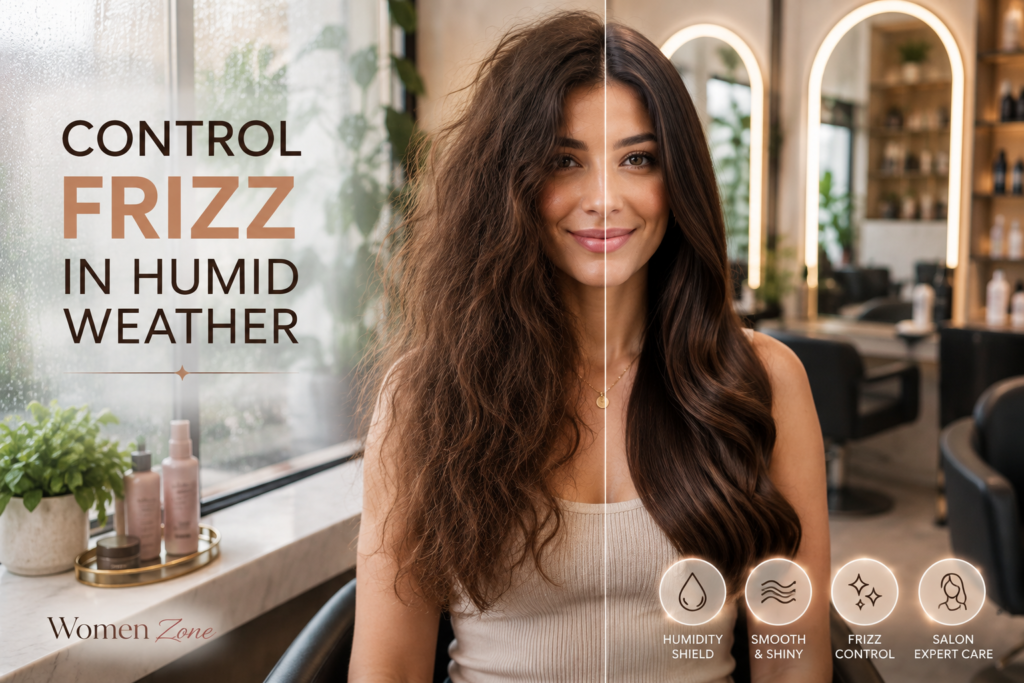

Oakville’s changing weather can make maintaining smooth, manageable hair more challenging, especially during humid summer days. You may notice that your carefully styled hair becomes puffy, your curls lose definition, or small flyaways appear shortly after stepping outside.
Humidity is not necessarily bad for your hair, but it can reveal existing issues such as dryness, damage, or high hair porosity. Understanding how moisture affects your hair can help you adjust your routine and prevent unnecessary frizz.
Whether you have straight, wavy, curly, coloured, or chemically treated hair, a few simple changes can make it easier to manage humidity-related hair problems.
Why Does Humid Weather Cause Frizzy Hair?
Hair is naturally affected by moisture in the surrounding environment. When humidity levels rise, water molecules can interact with the hair fibre and cause it to absorb additional moisture.
This can cause the hair shaft to swell and change shape. When the outer cuticle is not lying smoothly, individual strands can move in different directions, creating the appearance of frizz.
The effect can be more noticeable if your hair is:
- Dry or dehydrated
- Chemically treated
- Frequently exposed to heat
- Bleached or coloured
- Naturally curly or wavy
- High in porosity
- Damaged or prone to breakage
This is why two people can experience the same weather but have completely different results with their hair.
How Oakville Weather Can Affect Your Hair
Oakville experiences different weather conditions throughout the year, and your hair-care routine may need to change with the seasons.
During warmer months, humidity can make hair swell and become harder to style. Outdoor activities, sweating, sunlight, and frequent swimming can add additional challenges.
During colder months, the air can become much drier, potentially leaving the hair feeling rough and dehydrated.
Instead of following exactly the same routine throughout the year, pay attention to how your hair responds to changes in temperature and humidity.
7 Ways to Control Frizz in Humid Weather
1. Keep Your Hair Properly Conditioned
One of the simplest ways to improve manageability is to maintain adequate conditioning.
A suitable conditioner can help improve softness and reduce friction between strands. Focus particularly on the mid-lengths and ends if your hair tends to become dry.
If your hair is coloured, highlighted, or frequently heat-styled, conditioning becomes even more important because these processes can affect the hair’s overall condition.
2. Avoid Excessive Heat Styling
Flat irons and curling tools can temporarily create a smooth finish, but excessive heat can contribute to dryness and damage over time.
If you regularly use heat styling tools:
- Apply heat protection before styling.
- Avoid unnecessarily high temperatures.
- Limit repeated passes over the same section.
- Allow your hair to rest between heat-styling sessions.
Healthy hair is generally easier to manage than hair that is repeatedly exposed to excessive heat.
3. Dry Your Hair Gently
The way you dry your hair can influence how much frizz you experience.
Aggressively rubbing wet hair with a towel creates friction and can disturb the outer cuticle. Instead, gently squeeze excess water from your hair and pat it dry.
If you blow-dry your hair, use an appropriate heat setting and avoid keeping the dryer too close to your strands.
4. Choose Products According to Your Hair Type
There is no single anti-frizz product that works perfectly for everyone.
Fine hair may become weighed down by heavy creams and oils, while thick or highly textured hair may require richer conditioning products.
Rather than choosing products based solely on trends, consider your:
- Hair texture
- Hair density
- Porosity
- Level of dryness
- Chemical treatments
- Styling habits
If you’re unsure what your hair needs, professional advice can help you avoid purchasing multiple products that may not be suitable.
5. Avoid Touching Your Hair Too Much
Constantly running your fingers through your hair may seem harmless, but repeated touching creates friction and can disturb your hairstyle.
This can be particularly noticeable with curls and waves because touching the hair can separate the natural curl pattern and create additional volume and frizz.
Once your hair is styled, try to leave it alone as much as possible.
6. Choose Hairstyles That Work With Humidity
You don’t always have to fight against the weather.
On particularly humid days, hairstyles that work with your natural texture can be easier to maintain than extremely sleek styles.
Depending on your hair type, you could try:
- Low buns
- Braids
- Half-up hairstyles
- Defined curls
- Loose ponytails
- Natural waves
The goal is to choose a style that remains attractive even if your hair gains a little natural movement throughout the day.
7. Protect Your Hair Before Going Outdoors
If you know you’re going to spend several hours outside, prepare your hair before leaving home.
Use appropriate styling products and avoid going outdoors with excessively damp hair. If you’re spending time in the sun or swimming, consider additional protection suited to your hair type.
Small preventive steps can make a significant difference in how your hair looks by the end of the day.
Why Does Humidity Affect Some Hair More Than Others?
Hair texture plays an important role.
Straight Hair
Straight hair can develop flyaways and lose its sleek appearance in humid conditions.
Wavy Hair
Wavy hair may become more voluminous while losing some of its definition.
Curly Hair
Curly hair can respond strongly to changes in moisture. Humidity may increase volume while making individual curls appear less defined.
Coloured or Chemically Treated Hair
Hair that has been coloured, bleached, straightened, or exposed to frequent heat may have increased porosity. This can make it more susceptible to environmental moisture.
If your hair has been chemically treated, maintaining its condition should be an important part of your routine.
How to Keep a Blowout Looking Better in Humid Weather
Spending time styling your hair only to see it become frizzy after going outside can be frustrating.
Preparation starts before you pick up your styling tool.
Begin with properly conditioned hair and gently remove excess water. Apply suitable heat protection before blow-drying, and make sure your hair is completely dry before leaving the house.
A professional stylist can also recommend techniques based on your hair’s texture and desired finish.
If you’re regularly searching for a hair salon near me because you struggle to recreate a smooth salon finish at home, consider asking a stylist to show you how to manage your particular hair type between appointments.
Can Professional Hair Treatments Help With Frizz?
Sometimes your regular home routine may not be enough, particularly if your hair is significantly dry, damaged, or difficult to manage.
Professional services can help improve the appearance and manageability of hair depending on its condition and your desired result. Treatments may focus on hydration, smoothing, conditioning, or improving the overall appearance of damaged hair.
However, the right treatment depends on the individual. A professional should consider your hair history, texture, current condition, and styling goals before recommending a service.
At Women Zone, professional hair-care guidance can help clients understand what their hair needs rather than simply choosing a treatment based on a trend.
Common Mistakes That Can Make Frizz Worse
Even a good hair-care routine can be undermined by everyday habits.
Using Too Much Product
Applying excessive amounts of styling products can leave your hair heavy, greasy, or difficult to manage.
Straightening Your Hair Every Day
Frequent high-heat styling can contribute to dryness and damage, potentially making frizz more noticeable over time.
Ignoring Split Ends
Split and damaged ends can make hair appear rough and unruly. Regular trims can help maintain a cleaner, healthier-looking appearance.
Changing Products Constantly
Using a different product every few days makes it difficult to understand what actually works for your hair.
Following Someone Else’s Hair Routine
A routine that works for someone with thick curly hair may not work for someone with fine straight hair. Your routine should be based on your own hair characteristics.
When Should You See a Professional?
Consider getting professional advice if your hair:
- Remains extremely frizzy despite regular conditioning
- Breaks easily
- Feels unusually rough or dry
- Has significant split ends
- Is difficult to style
- Has been frequently coloured or chemically treated
- Requires excessive heat styling to look manageable
A professional assessment can help identify whether your main concern is dryness, damage, porosity, styling technique, or product buildup.
When choosing a hair salon Oakville clients can rely on, look for professionals who take the time to understand your individual hair rather than recommending the same solution to everyone.
A Simple Humidity-Friendly Hair Routine
You don’t need a complicated routine to manage frizz.
Wash: Choose a shampoo suited to your scalp and hair type.
Condition: Apply conditioner mainly to the lengths and ends.
Dry gently: Avoid aggressive towel rubbing.
Protect: Use heat protection whenever using styling tools.
Style: Select products appropriate for your texture.
Maintain: Trim damaged ends and consider professional treatments when necessary.
Adapt: Adjust your routine as Oakville’s weather changes.
Frequently Asked Questions
Humidity adds moisture to the hair, which can cause the hair shaft to swell and disrupt its smooth texture. Dry, damaged, curly, and chemically treated hair may be more prone to visible frizz.
Use a moisturizing conditioner, minimize excessive heat styling, dry your hair gently, and choose anti-frizz products suited to your hair type. Keeping your hair properly conditioned can also improve manageability.
Yes. Warmer and more humid weather may require more attention to moisture balance, frizz control, and heat protection. Your routine may need to be adjusted based on your hair texture and condition.
Professional treatments can improve the appearance and manageability of certain types of frizzy or damaged hair. A stylist can assess your hair and recommend an option based on its condition, texture, and your desired result.
There is no fixed schedule for everyone. It depends on your hair type, damage level, styling habits, and treatments. Regular professional trims and occasional treatments can help maintain healthier-looking, more manageable hair.
Final Thoughts
Humidity can make hair more difficult to manage, but frizz is not something you simply have to accept. Understanding your hair type, maintaining proper moisture balance, reducing unnecessary heat, and using suitable styling techniques can make a noticeable difference.
Most importantly, don’t treat every frizz problem in the same way. Hair that is dry, damaged, curly, coloured, or highly porous may require completely different care.
Women Zone focuses on personalized hair care and styling, helping clients choose approaches that suit their individual hair rather than relying on a one-size-fits-all routine.
If your hair continues to become unmanageable in Oakville’s changing weather, professional guidance can help you identify the underlying issue and develop a routine that works better for you.


